

What Happens When Tooth Decay Reaches the Nerve?
Mysa Dental
09/05/2026
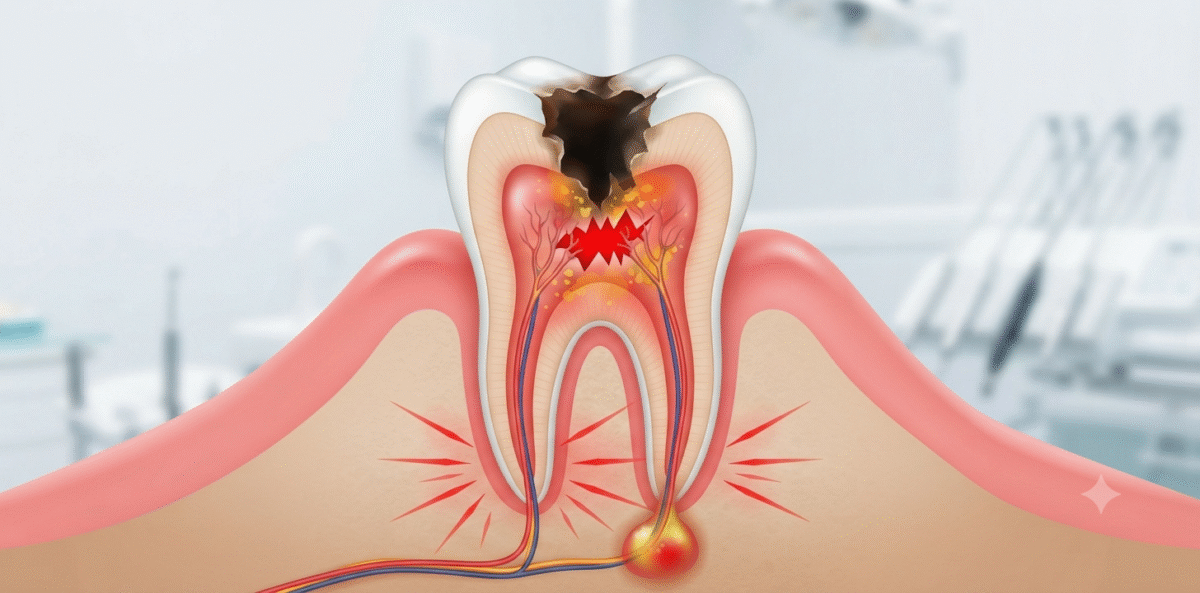
A cavity may begin as a small area of tooth decay, but if it is left untreated, the damage can gradually move deeper into the tooth. Once decay reaches the pulp, commonly referred to as the tooth’s “nerve,” the problem becomes more serious and usually requires more than a simple filling.
Understanding what happens when tooth decay reaches the nerve can help you recognize warning signs and seek treatment before the infection causes further damage.
What Is the Nerve Inside a Tooth?
Inside every healthy tooth is a soft tissue called the pulp. It contains nerves, blood vessels, and connective tissue that help support the development of the tooth.
The pulp is protected by the outer enamel and the underlying dentin. When decay progresses through these protective layers and reaches the pulp, bacteria can irritate or infect this sensitive tissue.
This is why a deep cavity can cause significantly more discomfort than a small cavity.
How Does Decay Reach the Nerve?
Tooth decay develops when bacteria in dental plaque produce acids that gradually break down tooth structure.
Initially, decay affects the enamel. If it continues, it can move through the dentin toward the pulp. As the decay gets closer to the nerve, the tooth may become increasingly sensitive.
Once bacteria enter the pulp, inflammation or infection can develop. At this point, treating only the outer cavity is generally not enough because the problem has extended into the inside of the tooth.
What Symptoms Can Occur?
A tooth with deep decay does not always cause obvious symptoms at first. However, several warning signs can develop as the pulp becomes irritated or infected.
These may include:
- Persistent sensitivity to hot or cold
- Pain that lingers after eating or drinking
- Spontaneous or throbbing tooth pain
- Pain when biting or chewing
- Increased sensitivity or tenderness
- Swelling around the tooth or gums
- A bad taste in the mouth
The severity and type of symptoms can vary. In some cases, a tooth with significant internal damage may eventually stop responding to temperature because the pulp has lost its vitality.
The absence of pain does not necessarily mean that the problem has resolved.
Why Does the Tooth Hurt So Much?
When the pulp becomes inflamed, pressure can build inside the tooth. Because the pulp is enclosed within hard tooth structure, there is limited room for swelling.
This inflammation can stimulate the nerves inside the tooth and create significant pain or sensitivity.
As the infection progresses beyond the pulp and toward the tissues surrounding the root, the tooth may become painful when biting or touching because the surrounding tissues can also become inflamed.
Can a Tooth Still Be Saved?
In many cases, a tooth with decay that has reached the pulp can still be preserved.
The appropriate treatment depends on the extent of the damage and the condition of the tooth. If the tooth can be restored, root canal treatment may be recommended to remove the infected or inflamed pulp, clean the internal canals, and seal the tooth.
After the internal treatment, the tooth may require a restoration such as a crown to protect its remaining structure, particularly when substantial tooth structure has been lost.
The goal is to eliminate the source of infection while preserving the natural tooth whenever possible.
What Happens If the Infection Is Left Untreated?
An infection inside a tooth does not always remain contained.
Without treatment, bacteria can travel through the root canal system and reach the tissues around the root. This can lead to an abscess, swelling, drainage, and damage to the surrounding bone.
In more advanced cases, the infection can cause significant discomfort and may require more extensive treatment.
This is why persistent dental pain or other signs of infection should not be ignored, even if symptoms temporarily improve.
How Does a Dentist Determine If the Nerve Is Affected?
A dentist does not rely on symptoms alone to determine whether decay has reached the pulp.
During an examination, the dentist may evaluate the tooth visually, review your symptoms, perform sensitivity or pulp tests, and use dental X-rays when appropriate.
X-rays can help reveal the depth of decay and changes around the root that may not be visible during a routine examination.
Combining these findings helps the dentist determine the condition of the tooth and recommend the most appropriate treatment.
Why Early Treatment Is Easier
The earlier tooth decay is detected, the more treatment options may be available.
A small cavity may require only a filling. Once decay reaches deeper layers of the tooth, treatment can become more involved and may require procedures to address the pulp and protect the remaining tooth structure.
Regular dental examinations allow your dentist to identify cavities before they become advanced, even when you do not have noticeable symptoms.
When Should You See a Dentist?
Do not wait for severe pain before scheduling an appointment. Sensitivity that keeps returning, discomfort when chewing, visible damage, swelling, or persistent tooth pain can all be reasons to have a tooth evaluated.
Prompt treatment can help prevent a small dental problem from becoming a more complicated one.
Protecting Your Tooth Starts With Early Care
When tooth decay reaches the nerve, the problem has progressed beyond a simple cavity. The pulp may become inflamed or infected, potentially affecting the tissues around the tooth.
At MySA Dental, a thorough examination can help determine how far the decay has progressed and whether the natural tooth can be treated and preserved.
Schedule a consultation with MySA Dental to evaluate tooth pain or deep decay and find out what treatment may be needed to protect your tooth.