

Can an Infected Tooth Affect Nearby Teeth?
Mysa Dental
08/01/2026
A tooth infection is more than just a painful dental problem—it can affect your overall oral health if left untreated. Many people assume an infection is limited to a single tooth, but in reality, bacteria can spread to the surrounding gums, bone, and even nearby teeth. That’s why seeking prompt treatment is essential to prevent more serious complications.
Whether the infection is caused by deep tooth decay, a cracked tooth, or advanced gum disease, early intervention can help protect not only the affected tooth but also the rest of your smile.
Let’s explore how an infected tooth can impact nearby teeth and why timely dental care is so important.
What Is a Tooth Infection?
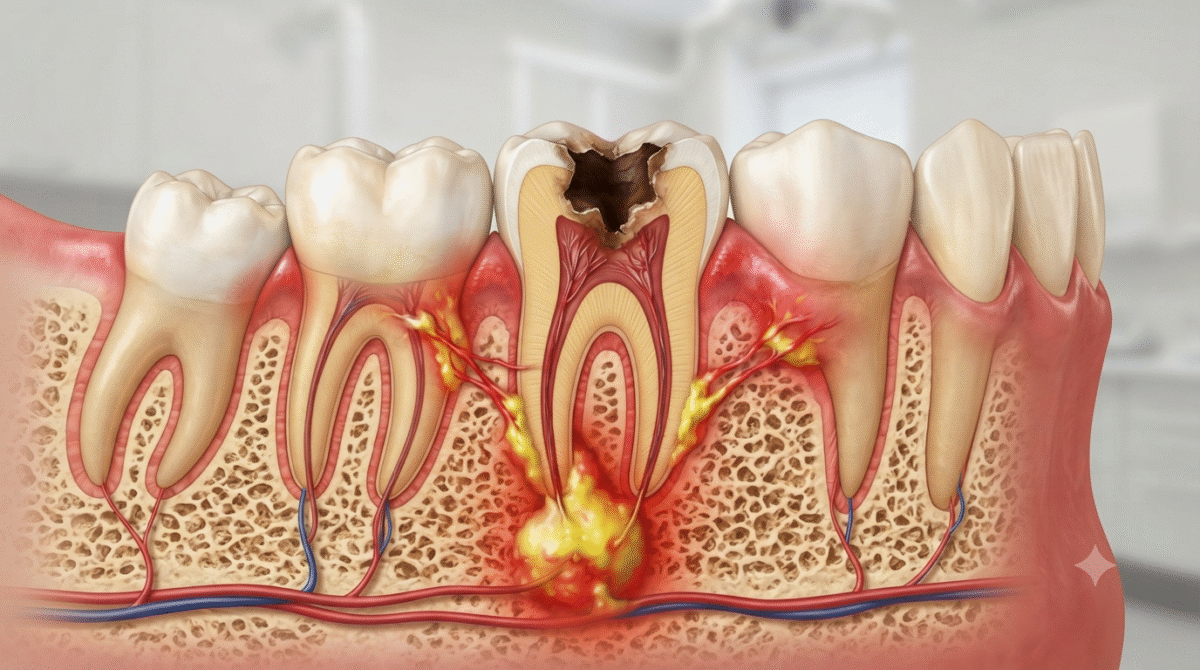
A tooth infection, also known as a dental abscess, occurs when bacteria enter the inner pulp of the tooth through a cavity, crack, or injury. The pulp contains nerves, blood vessels, and connective tissue that keep the tooth healthy.
Once bacteria reach the pulp, the infection can spread beyond the tooth root into the surrounding tissues if left untreated.
Can an Infected Tooth Spread to Nearby Teeth?
Yes.
Although an infection doesn’t spread directly from one tooth to another, the bacteria responsible for the infection can spread through the surrounding gums, bone, and soft tissues.
As the infection progresses, neighbouring teeth may become affected if the bacteria reach their supporting structures or create additional areas of infection.
Prompt treatment helps stop the infection before it spreads further.
How Does the Infection Spread?
A dental infection can spread in several ways, including:
- Through the root tip into the jawbone.
- Into the surrounding gum tissue.
- Between neighbouring teeth through deep pockets caused by gum disease.
- Into nearby soft tissues if an abscess develops.
Without treatment, the infection may continue spreading, increasing the risk of damage to multiple teeth and surrounding bone.
Signs That an Infection May Be Affecting Nearby Teeth
As an infection spreads, you may notice symptoms beyond the original tooth.
These may include:
- Pain that radiates to nearby teeth.
- Swollen or tender gums.
- Sensitivity when chewing.
- A bad taste in the mouth.
- Persistent bad breath.
- Swelling of the face or jaw.
- Loose teeth in the affected area.
If you experience any of these symptoms, seek dental care as soon as possible.
What Causes Tooth Infections?
Several dental problems can lead to infection, including:
- Untreated cavities.
- Cracked or broken teeth.
- Deep dental decay.
- Failed dental restorations.
- Advanced gum disease.
- Dental trauma.
Routine dental examinations can often detect these problems before they progress to an infection.
Can an Infected Tooth Damage the Jawbone?
Yes.
If bacteria spread beyond the tooth root, they can infect the surrounding jawbone.
This may result in:
- Bone loss around the affected tooth.
- Reduced support for neighboring teeth.
- Difficulty placing future dental implants.
- Increased risk of tooth loss.
Treating the infection early helps preserve both the affected tooth and the surrounding bone.
Can a Tooth Infection Affect Overall Health?
Yes.
Although uncommon, a severe untreated dental infection can spread beyond the mouth and enter the bloodstream or surrounding tissues.
In rare cases, this may lead to serious health complications that require urgent medical attention.
This is one of the reasons dentists recommend treating dental infections as soon as possible rather than waiting for the pain to improve.
How Is an Infected Tooth Treated?
The appropriate treatment depends on how advanced the infection has become.
Your dentist may recommend:
- Root canal treatment to remove the infected pulp while saving the tooth.
- Drainage of the abscess.
- Antibiotics if the infection has spread beyond the tooth.
- A dental crown to restore the treated tooth.
- Tooth extraction if the tooth cannot be saved.
Early treatment often provides more conservative options and better long-term outcomes.
Can Nearby Teeth Be Saved?
In many cases, yes.
If the infection is diagnosed early, nearby teeth often remain healthy once the source of the infection is eliminated.
However, delaying treatment increases the likelihood that surrounding tissues and neighboring teeth may also require treatment.
Routine dental visits allow infections to be identified before they spread.
How Can You Prevent Tooth Infections?
The best way to prevent infections is through consistent oral hygiene and regular dental care.
Healthy habits include:
- Brushing twice daily with fluoride toothpaste.
- Flossing every day.
- Visiting your dentist for regular checkups and cleanings.
- Treating cavities promptly.
- Avoiding excessive sugary foods and drinks.
- Wearing a mouthguard during sports if recommended.
These simple habits significantly reduce the risk of developing dental infections.
When Should You See a Dentist?
You should schedule a dental appointment immediately if you experience:
- Severe or persistent tooth pain.
- Swelling around the tooth or gums.
- Pus or drainage near a tooth.
- Facial swelling.
- Pain while chewing.
- A tooth that feels loose.
- Fever accompanied by dental pain.
Prompt evaluation can prevent the infection from spreading and improve the chances of saving the affected tooth.
An infected tooth is not a problem you should ignore. While the infection may begin in a single tooth, it can spread to the surrounding gums, jawbone, and nearby teeth if left untreated. Early diagnosis and prompt treatment can stop the infection, preserve your oral health, and prevent more complex dental procedures in the future. Taking action at the first sign of infection is the best way to protect your smile.
Schedule your dental examination today and book your consultation with our team to treat tooth infections early and protect your smile from further complications.